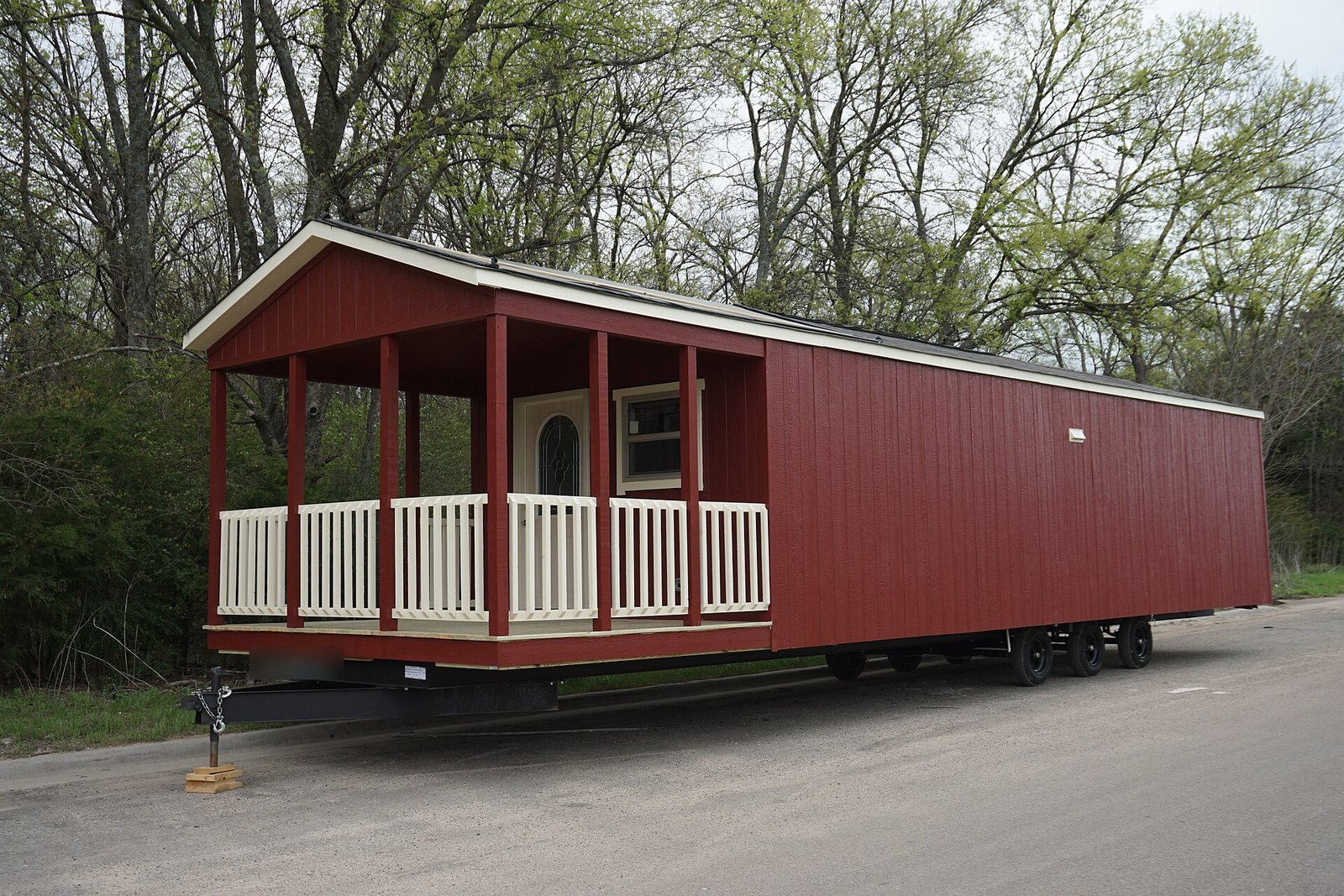
You bought a 1998 double-wide on two acres outside Noble, or you’re setting a new single-wide on family land near Lexington, and the quote form asks questions a site-built house never gets: what year, what make, how is it anchored, is it skirted. Mobile home insurance in Oklahoma comes down to three things: how the home is tied down, how wind and hail are written on the policy, and whether a claim settles at actual cash value or replacement cost. Manufactured homes are usually written on a policy built for them, not on a standard homeowners form, and those three answers shape most of what the policy can do after a storm.
How common are manufactured homes around Norman?
Less common than in the rest of the state, which surprises people. The Census Bureau’s latest five-year estimates count 6,892 mobile homes in Cleveland County, 5.5% of all housing units. Statewide the share is 8.2%, or about 146,000 homes. So Cleveland County runs below the Oklahoma average, mostly because Norman and Moore are built out with site-built subdivisions.
The homes that are here skew older. Of roughly 6,350 occupied mobile homes in the county (the Census lumps in a small number of RVs, boats and vans), about 56% were built before 2000, and about one in eight before 1980. Age is the first thing an underwriter looks at, and it feeds straight into how a claim settles.
Why do tie-downs come up on the application?
Because wind is the defining exposure for a manufactured home in central Oklahoma, and anchoring is what keeps a home on its piers when the wind gets up. Oklahoma has specific rules here. A new home has to be installed to HUD’s federal installation standards or the manufacturer’s approved instructions. For a previously occupied home, Oklahoma’s rules for a standard setup call for diagonal ties within 2 feet of each end and no more than 11 feet apart, with anchors rated for at least 4,725 pounds. A 16-by-80 home works out to eight diagonal ties per side. The state also treats using an unlicensed installer as an unacceptable procedure.
Here’s the finding that doesn’t flatter anyone: every Oklahoma county is in HUD’s Wind Zone I, the base design standard used across most of the country. The stronger Zone II and Zone III standards are reserved for hurricane coastlines. Oklahoma logged 152 tornadoes in 2024, according to the National Weather Service in Norman, 36 of them in November. A home built to the minimum wind standard and set on tired anchors is a real risk, and insurers price that.
Moving a home, re-leveling it after a wet spring, or buying one that’s been sitting a while are all good moments to have the anchoring looked at.
How are wind and hail usually written?
On many manufactured home policies, wind and hail carry their own deductible, and it may be a percentage of the dwelling limit rather than a flat dollar amount. As an example, on a $90,000 dwelling limit a 2% wind/hail deductible is $1,800 out of pocket before the policy pays anything on a wind claim. We walked through that arithmetic in wind and hail deductibles in Oklahoma. Some policies also treat wind differently on homes past a certain age. Policies vary on this more than people expect.
Actual cash value or replacement cost?
This is the line that matters most on an older home. Actual cash value pays what the damaged property was worth at the time of the loss, which means depreciation comes off the top. Replacement cost pays what it takes to repair or replace with like kind and quality, usually subject to its own conditions.
On a 25-year-old single-wide, the gap between those two numbers can be wide, and older homes are more often written at actual cash value. Some policies settle the roof or the siding one way and the rest of the home another. Neither one is wrong; it’s the contract you’re buying, and it’s worth knowing which one you have before a storm, not after. Your policy is the thing that answers this.
Common questions
Does a standard homeowners policy cover a mobile home?
Usually not. Manufactured homes are typically written on a policy designed for them, which still includes the home, detached structures, belongings, additional living expense, and liability, up to the limits chosen.
Does the age of the home change the policy?
Often. Age can affect which companies will write the home, how a roof or wind claim settles, and whether replacement cost is available at all.
What about a home in a park versus on my own land?
The policy follows the home either way, but the questions change. On your own land, other structures, a well house, or a shop may need limits. In a park, the lot lease may set insurance requirements.
Let’s look at how your home is written
If you own a manufactured home anywhere from Noble to Newcastle and aren’t sure whether it settles at actual cash value or replacement cost, take a look at our mobile home insurance options, start a personal quote, or call (405) 701-5368. We’ll go through the tie-down questions, the wind deductible, and the settlement terms with you, in plain English. For a look at what else hits this county besides tornadoes, see Cleveland County’s FEMA file.
This article is general information about how coverage typically works, not advice about your specific situation. No two insurance contracts are the same, and your policy is the only thing that says what you have. If you’d like someone to read it with you, that’s what we’re here for.