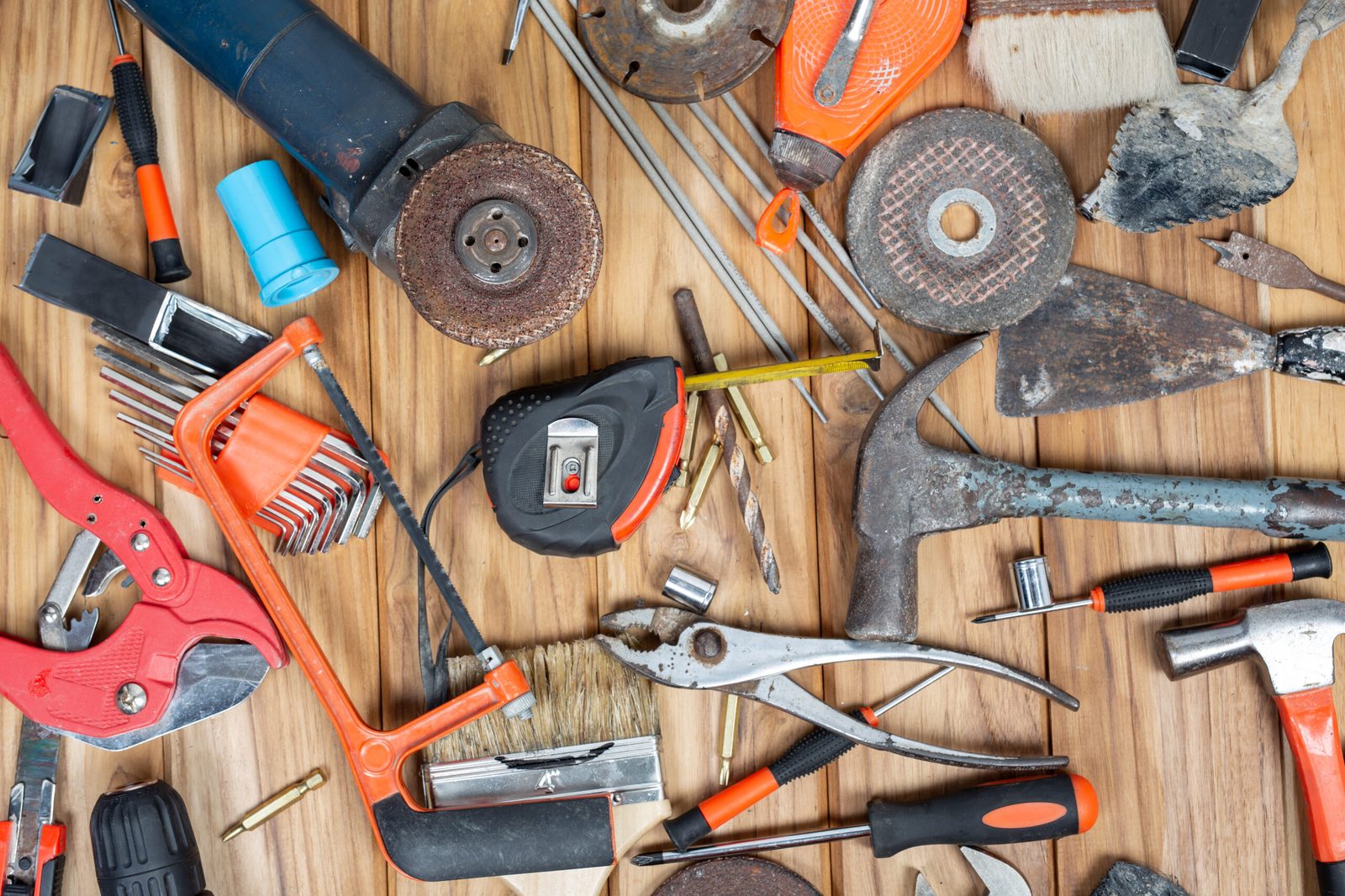
You park the work truck in the driveway in south Norman at 7 p.m. At 6 a.m. the side toolbox is pried open, the back window is broken, and the drills, saws, meters, a laser level and a generator are gone. Call it $20,000 of gear and a full day’s work you can’t start. The first surprise for a lot of contractors is that the truck’s auto policy usually isn’t built to pay for the tools inside it. Commercial auto handles the truck: the broken window, the damaged toolbox lid. The tools themselves are typically a job for a separate tools and equipment coverage, often called contractors equipment or inland marine. If that isn’t on the account, the loss may land on the business.
Why doesn’t the auto policy cover the tools?
Auto policies are written around the vehicle. Physical damage coverage on a commercial auto policy generally pays to repair or replace the truck and, in many forms, equipment that’s permanently attached to it, like a mounted utility bed or a built-in toolbox. Loose tools and portable equipment are business property that happens to be riding along. Most auto forms don’t treat them as part of the vehicle.
A standard commercial property policy usually has the opposite problem. It’s built around a fixed location, so tools that spend most of their life in a truck, a trailer or a job site across town may get little or no protection once they leave the shop.
What does tools and equipment coverage do?
Contractors equipment coverage, usually written on an inland marine form, is designed for property that moves. It generally follows tools and equipment from the shop to the truck to the job site. A few parts of it decide how a $20,000 theft actually gets paid:
- The limit. This is the total the coverage will pay. If the tools are worth $35,000 and the limit is $10,000, that’s the ceiling.
- Scheduled vs. unscheduled items. Higher-value pieces like a skid steer, a generator or a laser level are often listed individually. Smaller tools may fall under a blanket limit with a per-item cap.
- Valuation. Replacement cost generally pays to replace a tool with a new one of like kind. Actual cash value subtracts depreciation. We covered that gap in our August newsletter piece, your tools are stolen tonight.
- Conditions on vehicles. Some forms have requirements for theft from an unattended vehicle, such as signs of forced entry or a locked compartment. Policies vary on this more than people expect.
Here’s an illustration, not a quote. On a $20,000 theft, a policy with a $15,000 limit and a $1,000 deductible would pay at most $14,000. That’s before any depreciation if the tools are valued at actual cash value. The business carries the other $6,000 or more, plus the day it couldn’t work.
Why does the equipment list matter so much?
Because nobody remembers everything at 6 a.m. in a driveway. Without a list, a claim turns into rebuilding it from memory, old receipts and bank statements, and items get missed. With a current list, the claim goes faster and the limit can be checked against reality ahead of time.
A list that holds up usually includes:
- Make, model and serial number for every powered tool and piece of equipment
- Approximate purchase date and what it would cost to replace today
- A few photos of each truck’s toolboxes loaded the way they normally are
- An update each time something is bought, sold, or moved to a different truck
Serial numbers also matter for getting gear back. The 2016 national equipment theft report from the National Equipment Register and the National Insurance Crime Bureau found only 21% of stolen equipment was recovered in 2016. Oklahoma ranked 8th in the country for reported equipment thefts that year, and Oklahoma City ranked 6th among cities. Those figures are older and cover heavier construction and farm equipment, but the pattern is familiar to anyone around here who’s lost a trailer: gear without recorded serial numbers rarely comes home.
The limit drifts while nobody’s looking
The quiet problem isn’t usually that a contractor never bought tools coverage. It’s that the limit was set years ago, when the business had one truck and $8,000 of gear. Now there are three trucks, a trailer, and a lot more expensive cordless tools. The coverage stayed the same while the toolbox grew. One quick test is to add up what it would cost to replace everything in one truck at today’s prices, then multiply by the number of trucks.
Your policy is the thing that answers what’s covered, where, and for how much. The equipment list is what lets you check whether that answer still fits your business.
Let’s put a number on your trucks
If you haven’t looked at your tools and equipment limit since the business grew, take a look at our contractors insurance options, or call (405) 701-5368. We work with contractors across Cleveland County and the OKC metro, and we’ll help you compare your list with your coverage.
This article is general information about how coverage typically works, not advice about your specific situation. No two insurance contracts are the same, and your policy is the only thing that says what you have. If you’d like someone to read it with you, that’s what we’re here for.